
Guide for parents
How to color together with your child
A coloring page is an easy way to spend calm time side by side. Here is how to make it a moment you share, based on research and advice from pediatricians.
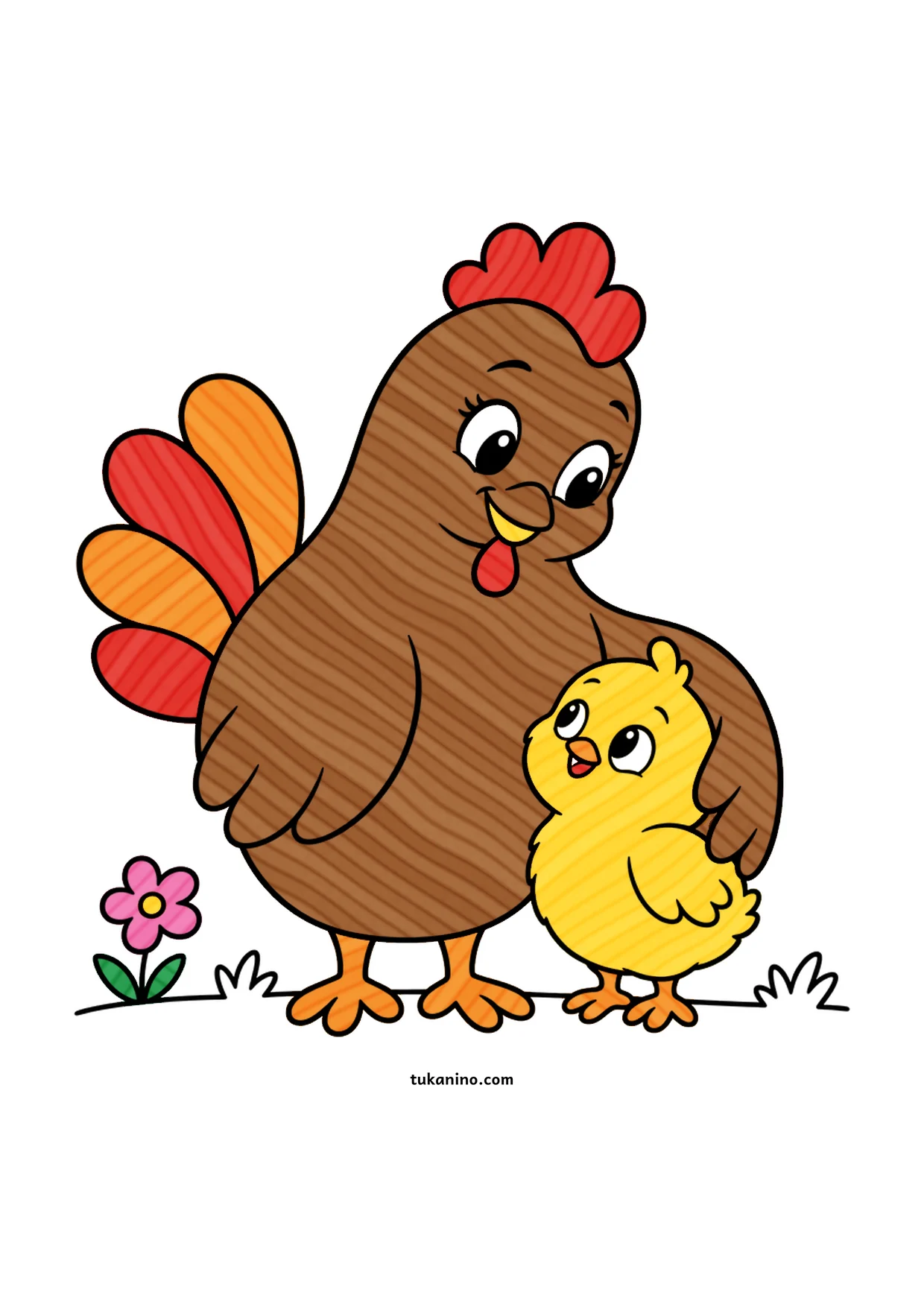 All done!
A simple way to start
You don't need a plan. These five steps come from parenting advice by the CDC and the Harvard Center on the Developing Child.
- Let your child pick the page. Show two or three pages and let them choose. Children whose parents offer more choices during a shared task tend to have stronger self-control and planning skills.1
- Sit side by side and follow their lead. Notice what your child looks at, and share that focus.2 Let them decide where to start.
- Describe what you see. “You made a big red circle.” The CDC says describing what your child does helps them stay with a task and builds vocabulary.3
- Take turns, and wait. Leave time for your child to answer before you speak again.2
- Stop when they are done. Children show it. They put the crayon down, look away or say “All done!”2

Talk back and forth
The Harvard Center on the Developing Child calls this “serve and return”. Your child says or does something, and you respond.2
Studies have linked these back-and-forth turns to children's language. In one, turns at 18 to 24 months were linked to vocabulary and language scores ten years later, even after family income and education were taken into account.4 In another, children aged 4 to 6 who had more conversational turns at home showed more activity in a language area of the brain.5 Both studies show a link, not proof of cause.
A coloring page gives you plenty to talk about. Name what your child is drawing or feeling, then wait for their answer.
What to say
Praise what your child did, not who they are. In a small study, 4-year-olds who heard “you did a good job drawing” coped better with a later mistake than children who heard “you are a good drawer”.6 Make the praise specific, so your child knows exactly what you like.3
- Try saying: “You did a good job coloring the sun.”Instead of:
“You're so clever.” - Try saying: “You used three colors on the fish.”Instead of:
“You're a great artist.” - Try saying: “You chose blue for the dog.”Instead of:
“Dogs aren't blue.” - Try saying: “You're making big circles.”Instead of:
“Why are you doing that?”
The CDC advises few questions and little criticism during play your child leads.3 In a home study, toddlers whose parents praised effort more often were more likely, at age 7 to 8, to enjoy challenges and to believe ability can grow. That is a link from one study of 53 children.7
A purple dog is fine.
A quiet moment without a screen
The World Health Organization advises no screen time for children under 2, and no more than 1 hour a day for ages 2 to 4. Less is better. For quiet time, it encourages reading, storytelling, singing and puzzles with a caregiver.8
The American Academy of Pediatrics suggests screen-free time for the whole family, with room for play, reading and art.9
Neither names coloring. But coloring together is one more way to share quiet time without a screen. The WHO also says young children should not sit for long stretches, so mix it with active play.8
What we can't promise
- A set number of minutes. Many websites say children can focus for 2 to 3 minutes per year of age. We found no research behind that rule. Follow your child's signals instead.2
- Cause and effect. The studies on talking and praise show links, not causes. Most are small, and some used role-play.5467
- A calmer child. We found no study showing that coloring calms children aged 2 to 5. See why coloring is good for young children.
Pick a page together
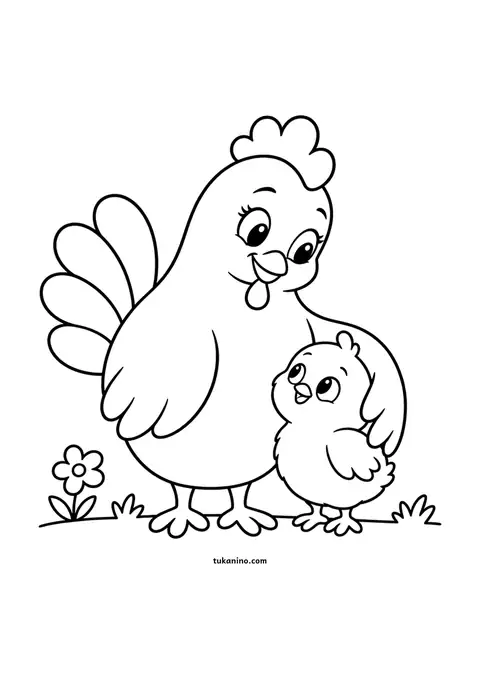
Show your child two or three pages, and let them choose. Every page is free and prints on A4.


Questions parents ask
How long should we color for?
There is no right number of minutes. Start small, and stop when your child shows you they are done.2 For play your child leads, the CDC suggests starting with at least five minutes a day.3
Should I correct the colors my child picks?
No. The CDC advises limiting criticism during play your child leads, and its example is about a crayon color.3 A purple dog is fine.
Should I color too, or just watch?
Either works. Your attention is what matters. The American Academy of Pediatrics says it is a parent's presence and attention that enrich children.10 Sit with your child, follow their lead and talk about what they are doing.3
Is coloring a good alternative to screen time?
It can be one. The WHO encourages quiet activities with a caregiver, such as reading, storytelling, singing and puzzles.8 Coloring together fits that idea, though the WHO does not name it.
Sources
Every claim on this page links to one of these sources. We read each one and note who was studied.
- 1StudyCastelo, R. J., Meuwissen, A. S., Distefano, R., McClelland, M. M., Galinsky, E., Zelazo, P. D., & Carlson, S. M. (2022). Parent provision of choice is a key component of autonomy support in predicting child executive function skills. Frontiers in Psychology, 12, 773492.doi.org/10.3389/fpsyg.2021.773492366 children aged about 3 to 6, US. Parents and children did puzzles together.
- 2ExplainerCenter on the Developing Child at Harvard University. (2019). Serve and return, and 5 steps for brain-building serve and return.Serve and return · 5 stepsParent guidance from a research center at Harvard University.
- 3GuidelineCenters for Disease Control and Prevention. (2026). Tips for child-led play. Essentials for Parenting Toddlers and Preschoolers.cdc.govParenting advice drawn from evidence-based parenting programs.
- 4StudyGilkerson, J., Richards, J. A., Warren, S. F., Oller, D. K., Russo, R., & Vohr, B. (2018). Language experience in the second year of life and language outcomes in late childhood. Pediatrics, 142(4), e20174276.doi.org/10.1542/peds.2017-4276146 children from the Denver area, US, recorded as toddlers and tested again at 9 to 14. The authors say the study cannot show cause.
- 5StudyRomeo, R. R., Leonard, J. A., Robinson, S. T., West, M. R., Mackey, A. P., Rowe, M. L., & Gabrieli, J. D. E. (2018). Beyond the 30-million-word gap: Children's conversational exposure is associated with language-related brain function. Psychological Science, 29(5), 700–710.doi.org/10.1177/095679761774272536 children aged 4 to 6, US. Home audio recordings and brain scans.
- 6StudyCimpian, A., Arce, H.-M. C., Markman, E. M., & Dweck, C. S. (2007). Subtle linguistic cues affect children's motivation. Psychological Science, 18(4), 314–316.doi.org/10.1111/j.1467-9280.2007.01896.x24 children aged 4 to 5, US. Role-play with puppets about drawing.
- 7StudyGunderson, E. A., Gripshover, S. J., Romero, C., Dweck, C. S., Goldin-Meadow, S., & Levine, S. C. (2013). Parent praise to 1- to 3-year-olds predicts children's motivational frameworks 5 years later. Child Development, 84(5), 1526–1541.doi.org/10.1111/cdev.1206453 children, Chicago area, US. Filmed at home at 1 to 3 years, followed up at 7 to 8.
- 8GuidelineWorld Health Organization. (2019). Guidelines on physical activity, sedentary behaviour and sleep for children under 5 years of age.iris.who.intThe WHO rates these as strong recommendations based on very low-quality evidence.
- 9GuidelineMunzer, T., Parga-Belinkie, J., Milkovich, L. M., Tomopoulos, S., Ajumobi, T., Cross, C., et al. (2026). Digital ecosystems, children, and adolescents: Policy statement. Pediatrics, 157(2), e2025075320.doi.org/10.1542/peds.2025-075320American Academy of Pediatrics policy. Replaces its 2016 media advice.
- 10GuidelineYogman, M., Garner, A., Hutchinson, J., Hirsh-Pasek, K., Golinkoff, R. M., et al. (2018). The power of play: A pediatric role in enhancing development in young children. Pediatrics, 142(3), e20182058.doi.org/10.1542/peds.2018-2058Clinical report of the American Academy of Pediatrics, reaffirmed in 2025.
No source matches that search.