
Guide for parents
Why coloring is good for young children
Coloring is a small, calm job for little hands. Here is what research says it helps with, and where the evidence stops.
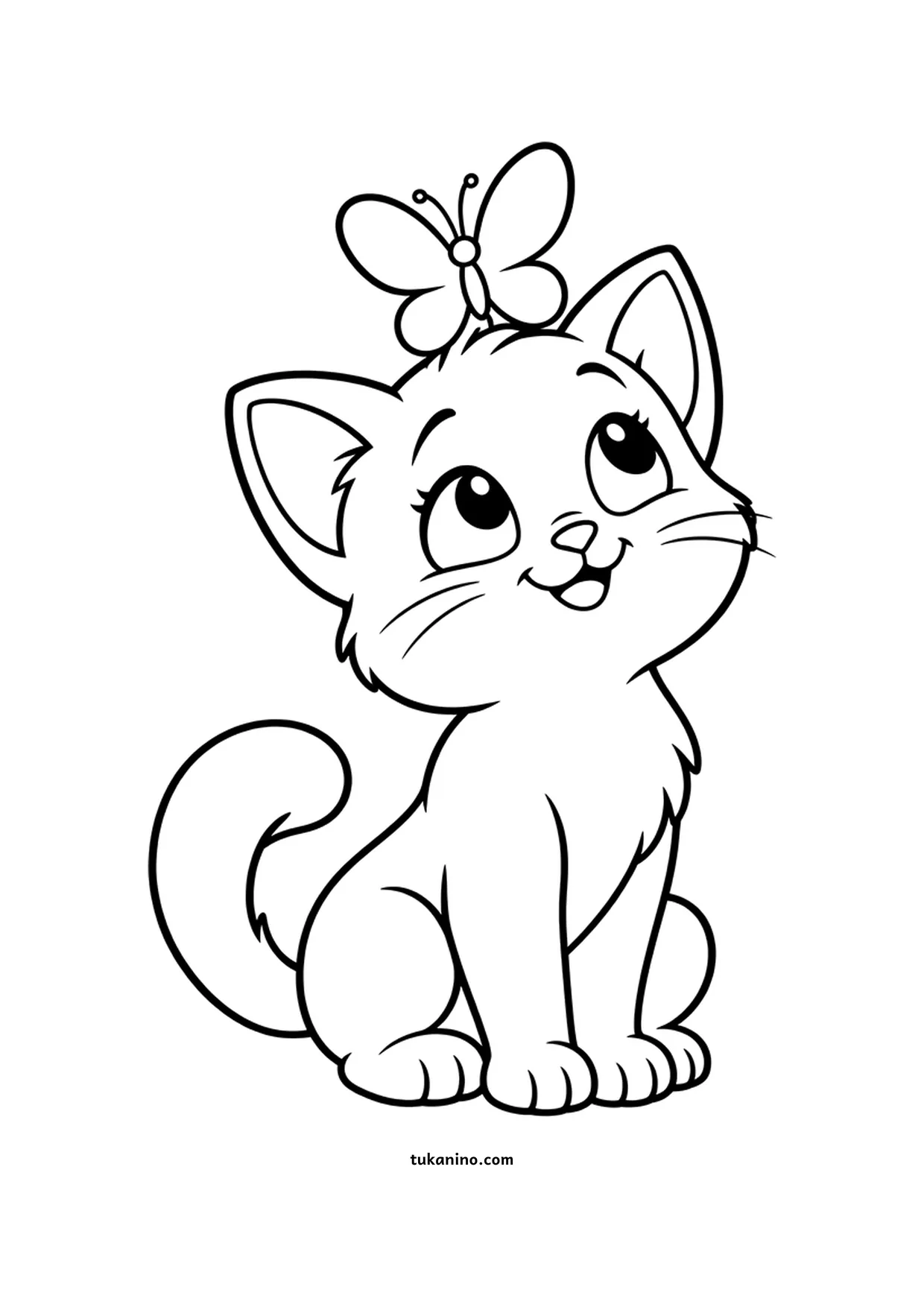
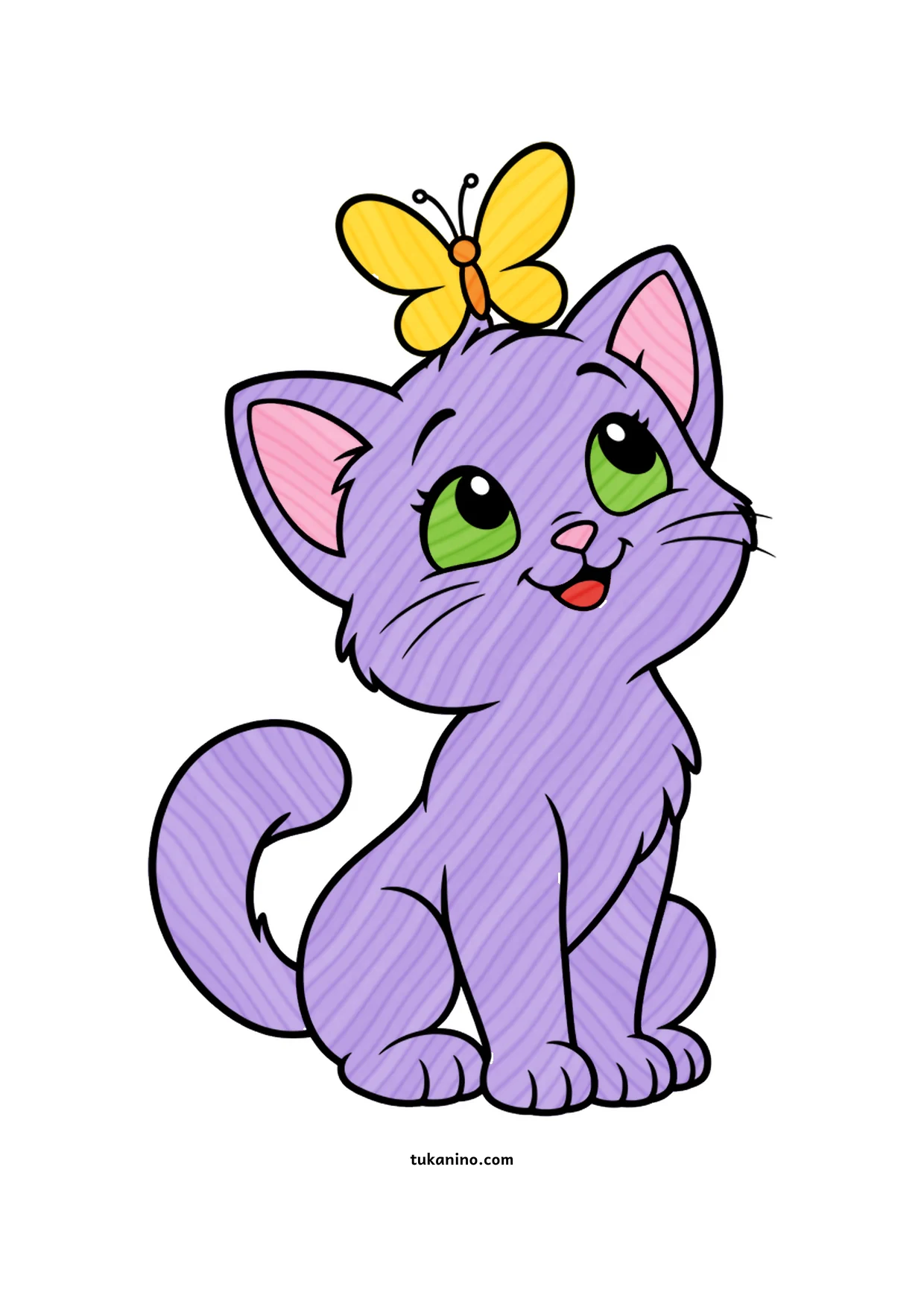
What the research says
We checked six common claims about coloring. The bars show how well research backs each one.
- Solid
- Linked, not proven
- Little research
- Not shown
Solid
Color words come slowly, between about 2 and 4
Mixing up colors, like calling orange “red”, is a normal step.1 By 4, most children can name a few colors.2
Solid
Pediatricians suggest crayons and paper
The American Academy of Pediatrics suggests crayons or markers and paper for children aged 1 to 3, as part of play they enjoy.3
Linked, not proven
Skilled little hands, better school results
Preschoolers with stronger fine motor skills tended to do better in reading and math later. No study tested coloring itself.456
Linked, not proven
Copying shapes, clearer handwriting
Kindergarten children who copy shapes well also tend to copy letters more clearly. This was measured with shapes, not coloring.78
Little research
Coloring calms toddlers
Studies on drawing, coloring and mood were done with children aged 6 to 12 and with adults. Very little research covers children under 5.9101112
Not shown
Coloring books harm creativity
Some art educators worry about it, but there is little research either way.13 We suggest a sheet of blank paper next to the coloring page.
Small hands at work
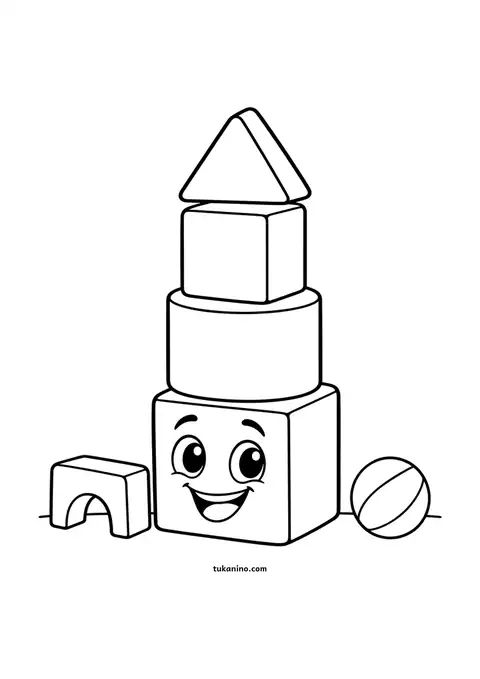
Coloring and drawing use small, careful movements of the hands and fingers. These are called fine motor skills. Copying a simple shape, like a circle or a cross, also needs the eyes and the hand to work together.
Studies that followed children over time found that preschoolers with stronger fine motor skills tended to do better in reading and math later.456 In one US study of 213 children, copying shapes was linked to higher scores in kindergarten. Building with blocks and drawing a person were not.5 Kindergarten children who copy shapes well also tend to copy letters more clearly.78
These studies show a link. They do not show that coloring causes better results. A coloring page is simply an easy, low-pressure way to use those skills. Trace a circle in the picture with your finger, then let your child draw one next to it. The guide to coloring by age shows when most children learn each shape.
A natural time to talk about colors
Children learn color words slowly, often between about 2 and 4. Along the way they often use one word for similar colors, such as calling orange “red”. This is a normal step.1
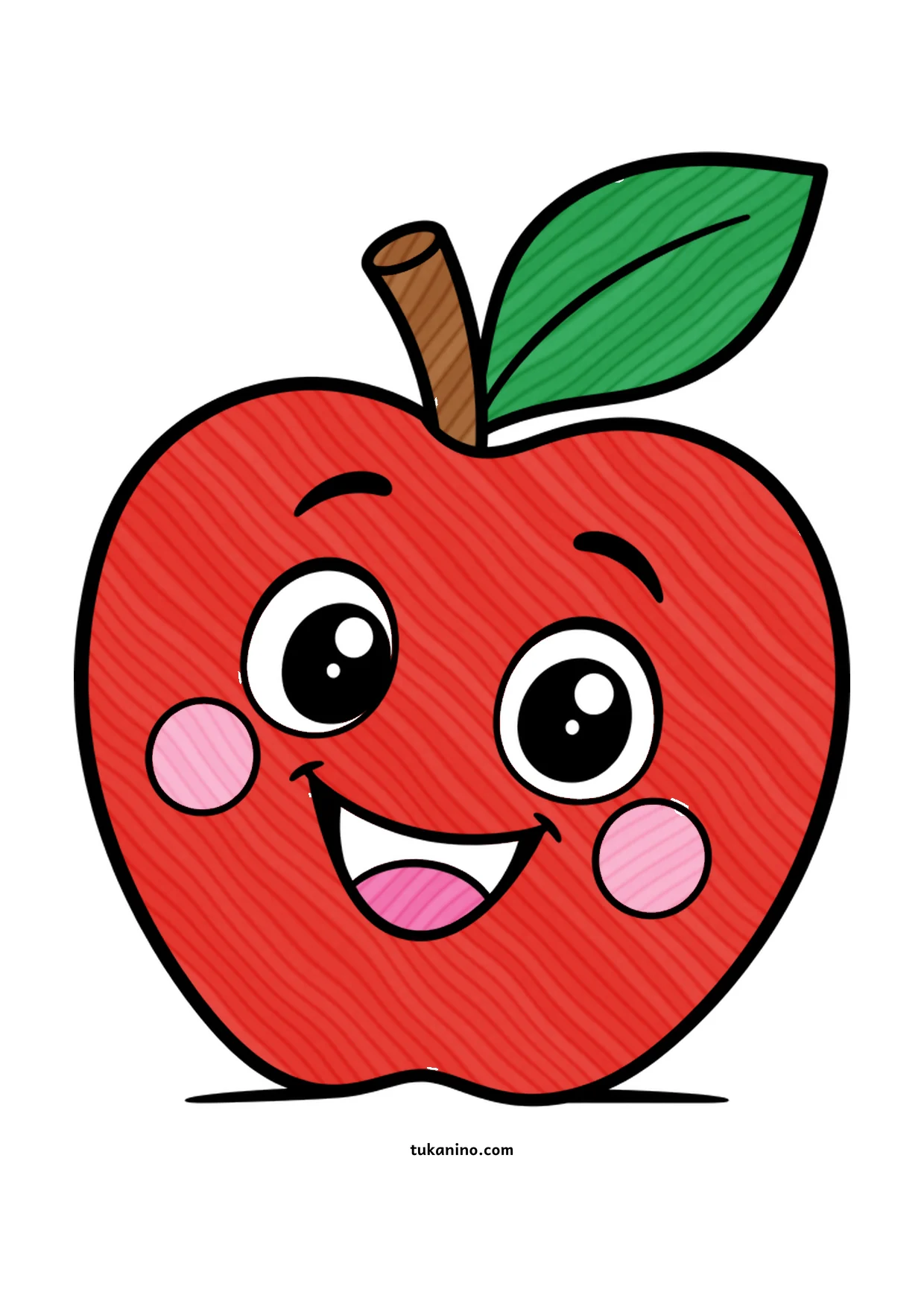
By 4, most children can name a few colors. By about 3, most can also say what is happening in a picture when you ask.2 So name the colors as your child uses them, and now and then ask about the picture: “What is the apple doing?”
Play your child chooses
The American Academy of Pediatrics says play helps young children build thinking, language, social and self-control skills. For ages 1 to 3, it suggests crayons or markers and paper for scribbling.3
The same report warns that worksheets and other highly structured tasks are not the same as play. Play is something a child chooses and enjoys.3 So offer a coloring page, then let your child decide what to color, which colors to use and when to stop.
Print a page and try it
Every page is free, prints on A4 and has thick lines for small hands.
Questions parents ask
Is coloring good for toddlers?
Coloring with crayons is a kind of play that pediatricians suggest for ages 1 to 3.3 It also uses fine motor skills. Keep it short, and let your child lead.
Sources
Every claim on this page links to one of these sources. We read each one and note who was studied.
- 1StudyWagner, K., Dobkins, K., & Barner, D. (2013). Slow mapping: Color word learning as a gradual inductive process. Cognition, 127(3), 307–317.doi.org/10.1016/j.cognition.2013.01.010English-speaking children aged about 2 to 5, US.
- 2
- 3GuidelineYogman, M., Garner, A., Hutchinson, J., Hirsh-Pasek, K., Golinkoff, R. M., et al. (2018). The power of play: A pediatric role in enhancing development in young children. Pediatrics, 142(3), e20182058.doi.org/10.1542/peds.2018-2058Clinical report of the American Academy of Pediatrics, an expert review of research.
- 4StudyGrissmer, D., Grimm, K. J., Aiyer, S. M., Murrah, W. M., & Steele, J. S. (2010). Fine motor skills and early comprehension of the world: Two new school readiness indicators. Developmental Psychology, 46(5), 1008–1017.doi.org/10.1037/a0020104Six long-term data sets from the US and UK. Fine motor skills at school entry predicted later math and reading.
- 5StudyCameron, C. E., Brock, L. L., Murrah, W. M., Bell, L. H., Worzalla, S. L., Grissmer, D., & Morrison, F. J. (2012). Fine motor skills and executive function both contribute to kindergarten achievement. Child Development, 83(4), 1229–1244.doi.org/10.1111/j.1467-8624.2012.01768.x213 children, average age 5, US Midwest. The authors say the study does not show cause and effect.
- 6StudyDinehart, L., & Manfra, L. (2013). Associations between low-income children's fine motor skills in preschool and academic performance in second grade. Early Education and Development, 24(2), 138–161.doi.org/10.1080/10409289.2011.636729Low-income preschoolers in Miami-Dade County, US, followed to second grade.
- 7StudyDaly, C. J., Kelley, G. T., & Krauss, A. (2003). Relationship between visual-motor integration and handwriting skills of children in kindergarten: A modified replication study. American Journal of Occupational Therapy, 57(4), 459–462.doi.org/10.5014/ajot.57.4.45954 kindergarten children, New York City, US.
- 8StudyWeil, M. J., & Cunningham Amundson, S. J. (1994). Relationship between visuomotor and handwriting skills of children in kindergarten. American Journal of Occupational Therapy, 48(11), 982–988.doi.org/10.5014/ajot.48.11.98260 kindergarten children aged 5 to 6, Washington State, US.
- 9StudyDrake, J. E., & Winner, E. (2013). How children use drawing to regulate their emotions. Cognition and Emotion, 27(3), 512–520.doi.org/10.1080/02699931.2012.720567Children aged 6 to 12, US. Free drawing, not coloring pages.
- 10StudyCarsley, D., Heath, N. L., & Fajnerova, S. (2015). Effectiveness of a classroom mindfulness coloring activity for test anxiety in children. Journal of Applied School Psychology, 31(3), 239–255.doi.org/10.1080/15377903.2015.105692552 children with an average age of about 11. Both groups colored, so there was no group to compare without coloring.
- 11StudyCurry, N. A., & Kasser, T. (2005). Can coloring mandalas reduce anxiety? Art Therapy, 22(2), 81–85.doi.org/10.1080/07421656.2005.1012944184 university students. Adults only.
- 12ReviewJia, Y., Zhang, S., & Liao, D. (2026). Drawing and visual art interventions for anxiety in children aged 5–12: A systematic review and meta-analysis of randomised controlled trials. BMJ Paediatrics Open, 10(1), e004752.doi.org/10.1136/bmjpo-2026-00475210 trials with 816 children aged 5 to 12, most of them in hospitals. Results varied too much for one clear answer.
- 13EssayKing, I. L. (1991). In search of Lowenfeld's proof that coloring books are harmful to children. Studies in Art Education, 33(1), 36–.doi.org/10.2307/1320575Looks for the evidence behind the claim that coloring books harm children, and calls for more research.
No source matches that search.